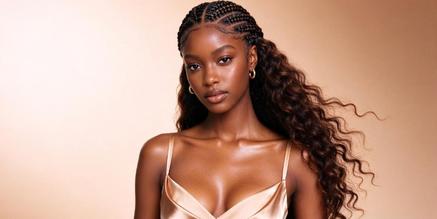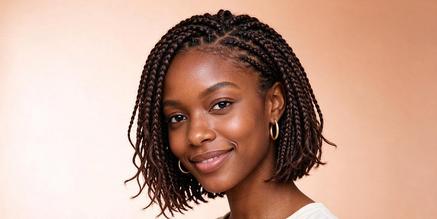
Box braids hairstyles have earned their decades-long spot on salon menus for one reason: no other protective style gives you this many ways to wear your hair. Those neat, square-parted braids — root to tip — typically last four to eight weeks, cost $60 to $400, and can be restyled endlessly without heat. Below, 13 looks are sorted— plus how to pick your perfect set.
What Are Box Braids?
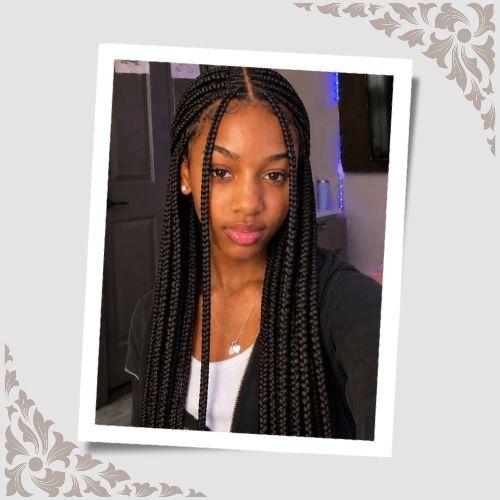
Image source: @Pinterest
Box braids get their name from the square sections, or "boxes," created when parting the hair. Each section is braided individually from root to tip, often with extensions added for extra length and volume. Box braids can be worn loose, in a ponytail, or in a bun.
Rooted in African braiding traditions, box braids are also a popular protective style. They keep natural hair tucked away for weeks at a time, reducing daily manipulation, heat styling, and breakage while making hair care easier.
How to Pick the Right Box Braids for You
Choosing Box Braids that Fit Your Face Shape
Braid width works the way a good haircut does. It changes where the eye stops.
- Round faces tend to look best in long sets that skim the collarbone, since that drop stretches the profile.
- For oval faces, consider waist-length medium, jumbo, or all sizes with little to no chance of an unsatisfactory result.
- For longer faces, go for medium braids on the sides to add some width.
- Heart-shaped faces can opt for end curls or a deep side part to help balance the face.
By Lifestyle or Occasion
- For the office, a low bun with medium braids will appear professional and require minimal maintenance.
- For the gym, go for jumbo or knotless braids secured at the back. The style will stay secured during class and will dry quickly after a wash.
- For destination weddings, try boho or goddess braids. These styles handle humidity well and will appear great in photos taken by your cousin.
12 Box Braids Hairstyles for You to Try
Box Braids by Size & Length
Small Box Braids
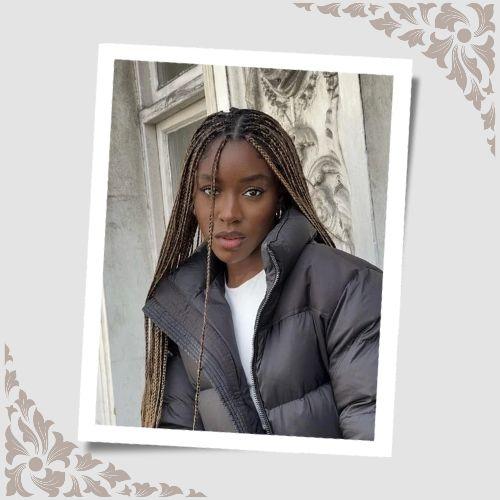
Image source: @Pinterest
If you prefer a more detailed look and don't mind spending extra time at the salon, small box braids may be a good choice. They're about the width of a pencil and create a full look that blends nicely with your natural hair. Installation usually takes six to eight hours. The small partings also make new growth less noticeable, helping the style stay neat for around six to eight weeks. While the braids are relatively lightweight, your edges still need gentle handling to avoid unnecessary tension.
Medium Box Braids
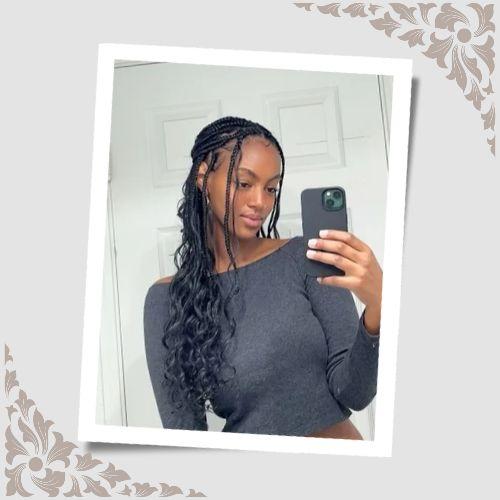
Image source: @Pinterest
Medium box braids strike a balance between quick and intricate, making them a popular choice for many. Roughly the width of a marker, they take four to six hours to install and, with proper care, last six to eight weeks. Their weight falls between smaller braids and jumbo styles, which is why medium knotless braids work well for first-timers. They also flatter a wide range of face shapes and fit easily into everyday routines. A middle part keeps the look classic; leaving a few braids loose around the face softens it.
Jumbo Box Braids
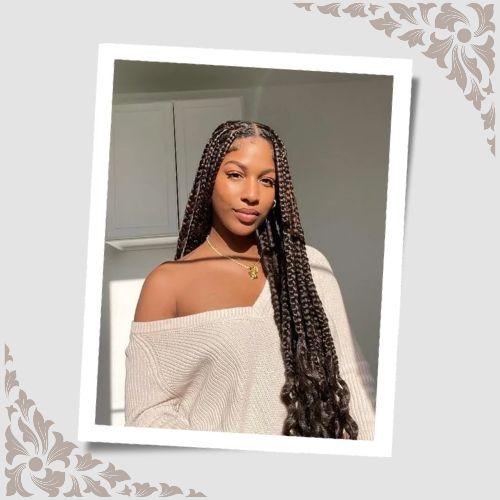
Image source: @Pinterest
If you are short on time, jumbo box braids typically only take three to five hours to install (and remove equally). This piece is quite bold due to being around the width of a thumb, perfect left loose for two front braids or in a high bun. People with an oval or round face will look great with this style. Because new growth shows sooner with this option, people can only wear jumbo braids for four to five weeks.
Waist-Length Box Braids
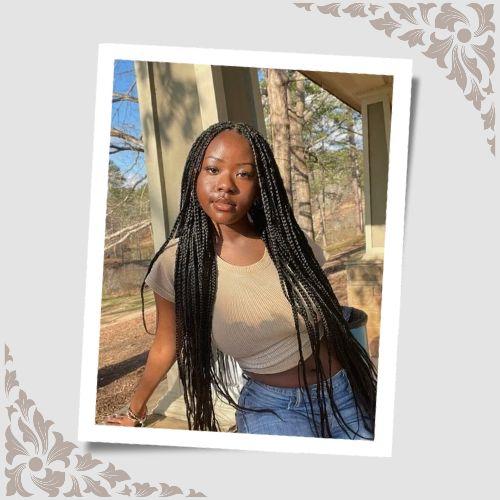
Image source: @Pinterest
Falling past the hips, waist-length box braids require extra extension hair and generally take six to eight hours to install. The added weight can leave your scalp uncomfortable after a few days, and the American Academy of Dermatology warns that heavy hairstyles can raise tension and contribute to hair loss. Before getting this waist-length braids style, discuss a more manageable braid length with your stylist and do not tighten the braid around the edges.
Box Braids by Parting & Technique
Knotless Box Braids
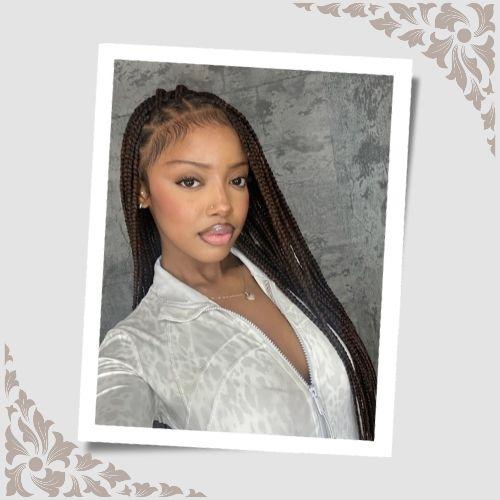
Image source: @Pinterest
One noticeable difference between knotless and traditional box braids is how the extensions are attached. With knotless braids, the stylist gently adds in the extension hair at the root before tightly knotting it. This usually results in a flatter braid that may be more comfortable at the hairline. Because of this, traditional braids are usually cheaper and apply faster than knotless braids. You can expect to pay between $150 and $400 based on the size and length of the braids.
Side Part Box Braids
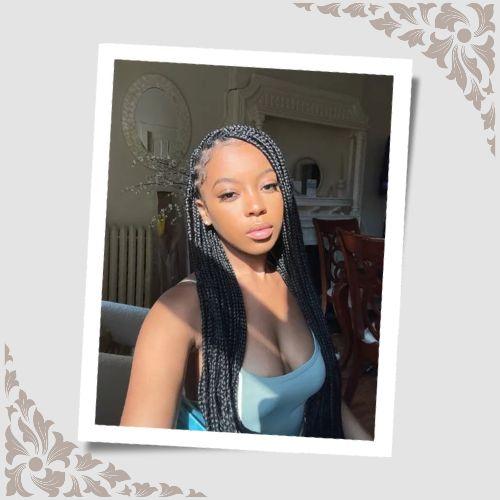
Image source: @Pinterest
One simple way to change up your braids is to wear a side part. It adds volume to one side and creates a diagonal line across your face, which can soften the appearance of a square jaw or complement a heart-shaped face. For a more defined look, ask your stylist for a deeper side part on your preferred side. Leaving a few braids loose around your face gives the style a more relaxed feel. It's an easy way to add dimension without extra accessories or complicated daily styling.
Triangle Box Braids
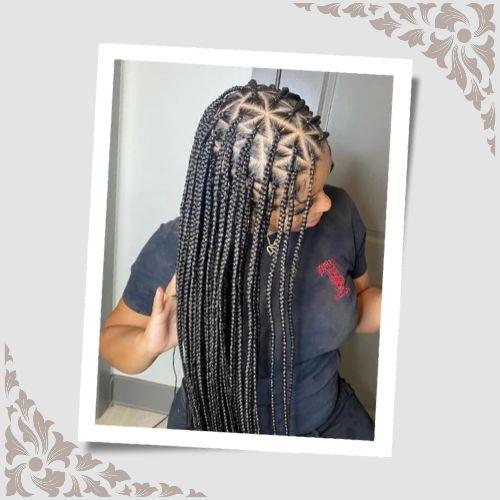
Image source: @Pinterest
For a different look, try using triangle-shaped parts instead of the usual square sections. When you wear your hair down, the geometric pattern adds an extra detail between the braids. Medium or jumbo box braids are especially good for showing off the shape. As with any precise parting style, talk to your stylist about the pattern beforehand so you can get the result you want. The triangle sections will also remain visible when you pull your braids into a bun or ponytail, giving the style a little more interest than the traditional square pattern.
Box Braids by Texture & Styling Details
Box Braids with Curly Ends
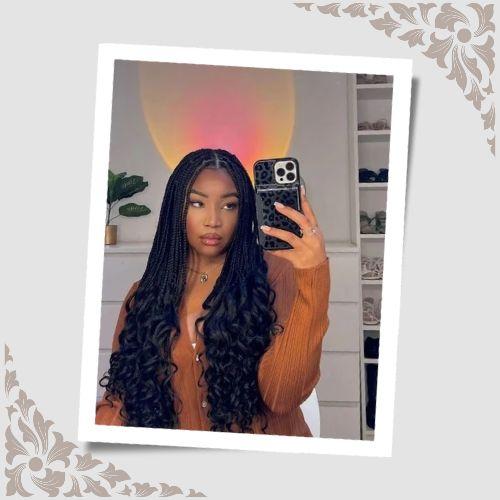
Image source: @Pinterest
If you want a little movement without curls running from root to tip, box braids with curly ends are a great option. Most of each braid stays straight, with curls added only to the last few inches. You can use pre-curled extensions or ask your stylist to curl the ends with hot water and curling rods. The added volume around the jawline can be especially flattering on oval or longer face shapes. For an easy everyday look, try wearing your braids half up, half down, or swept over one shoulder.
Goddess Box Braids
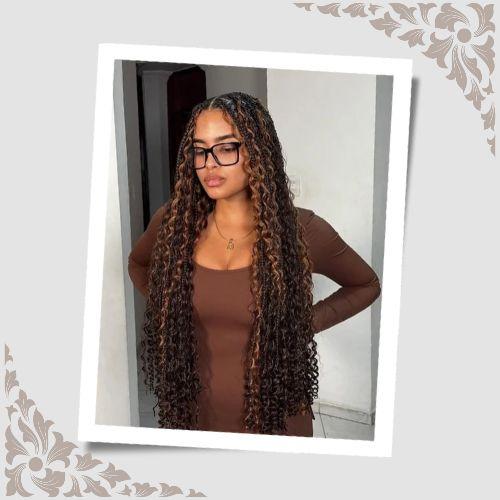
Image source: @Pinterest
Loose curls threaded through the braids give goddess braids their soft, full look. They're a frequent pick for weddings and special occasions, especially when you want a style with a bit more texture. Those extra strands do ask for attention, though: they can tangle and become frizzy, and gently separating them with your fingers keeps them looking neat. If you swim or work out regularly, consider whether you're happy with that extra upkeep. Leaving the braids down with a few pieces pinned back is a simple way to show off the curls.
Boho Box Braids
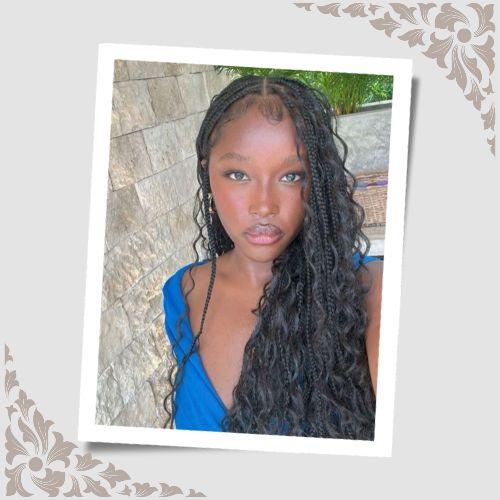
Image source: @Pinterest
What sets boho box braids apart is the relaxed finish. Instead of distributing curls evenly, this style mixes straight sections with loose curls and ringlets in a less uniform pattern—one braid may carry just a few curly strands while another is full of texture. The effect feels casual and a little undone, which is why it's so popular for beach trips, festivals, and vacations. When you talk it over with your braider, say whether you'd prefer just a hint of curls or a fuller, more textured result.
Box Braids with Beads
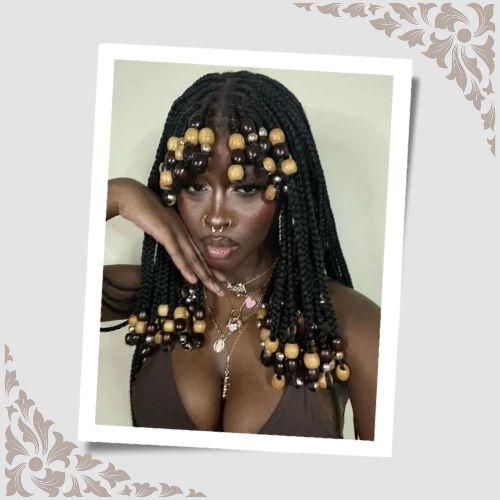
Image source: @Pinterest
You don’t need to alter the parting or size of the braid to personalize this hairstyle. Add some beads to make it more uniquely you, even if it otherwise is a very basic braid. Place beads on each braid or just on the ends. Rather than adding beads to every braid, consider adding three or four to the front pieces. To keep the look everyday comfortable, go with lighter beads.
Box Braids with Bangs
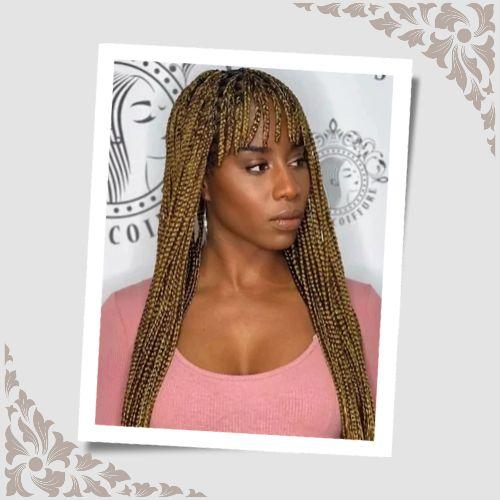
Image source: @Pinterest
To make classic box braids look different, adding bangs is an easy way to switch things up. This style features a full fringe made of shorter braids that fall across the forehead, framing the face and drawing attention to the eyes. Small or medium box braids work especially well, ideally with longer lengths for contrast. You can leave the rest of your braids down to show off the full style or pull them back while keeping the bangs in place.
Frequently Asked Questions About Box Braids
How Long Do Box Braids Last?
On average, most box braids will last between four and eight weeks, depending on the size. Because smaller box braids have the densest parting, they hide new hair growth the longest and can look fresh up to eight weeks. Jumbo box braids often begin to show signs of age around four or five weeks. To keep your hairline protected, limit any installation to six weeks maximum — treat six weeks as the cap, not something to try to beat.
How Much Do Box Braids Cost?
Depending on your location, length, and size, box braids usually range between $60 and $400. Small waist-length braids will be closer to the maximum because they require more chair time and more extension hair. Knotless box braids cost between $150 and $400 because they require more time and expertise to feed in. Before getting your box braids done, request a total cost because salon-only estimates usually do not include the hair.
Are Knotless Braids Better than Traditional Box Braids?
Neither is better overall — knotless braids are more comfortable, while traditional box braids are faster and cheaper. Because knotless braids are fed in gradually, your new hair is treated more gently, and there is less tension on your scalp. These cost slightly more, at $150 to $400, and require a slightly longer installation time. Traditional box braids begin with a knot at the root to be installed, making them tighter but quicker and less expensive to complete. Choose knotless if you have a history of rough installations on your hairline.
How Often Should You Wash Box Braids?
You should wash your box braids every one to two weeks, focusing primarily on your scalp (not the braided hair). Use a gentle shampoo diluted in an applicator bottle and gently work it into your hair using your fingers. Be sure to rinse it out completely to ensure nothing remains underneath your braids. To keep your hair comfortable between washes, apply a light oil to your scalp every few days. Before sleeping, cover your braids with satin and never sleep with wet braids, or mildew will set in.
Do Box Braids Damage Your Hairline?
By themselves, no — but if your braids are too tight, too heavy, or you've had them for longer than six weeks, there is a risk. Due to consistently tugging at the root area, you could develop traction alopecia (hair loss on your hairline) — but this can be reversed if caught early before much hair loss has occurred by ceasing the tugging. If you feel tension while getting your braids done, talk to your stylist. Request to have your edges left out for an extra layer of safety.
How Long Should You Wait Between Box Braid Installs?
Generally, you should wait between two and four weeks to redo a box braid set versus installing a new one. This gives your hair a chance to rest from being constantly tugged. During this time, you can shampoo using a hydrating formula, deep-condition your hair, and trim any split ends you notice. If your hairline appears thinner than normal or if you feel it is uncomfortable, wait longer to install the next set and try going with a lower-tension option such as loose twists.