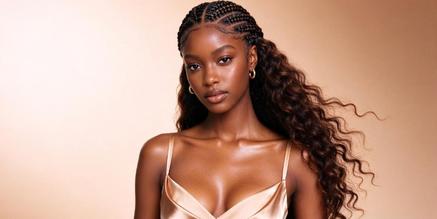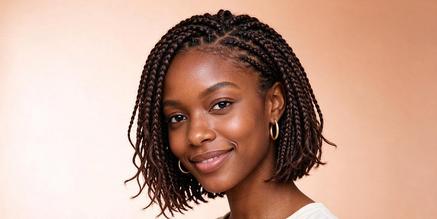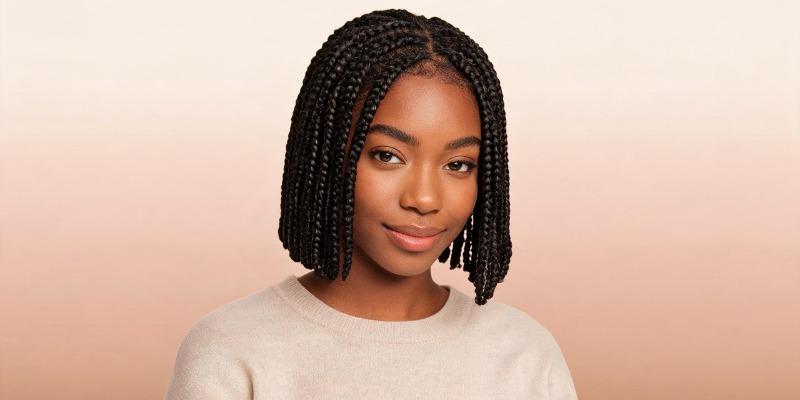
Looking for a braided hairstyle that's beautiful, versatile, and still sharp by week two? Fulani braids might be exactly what you need. They suit most face shapes, hold for weeks rather than days, and go from office to wedding without a touch-up.
Drawn from traditional Fulani hairstyles of West Africa, the look carries real history and still feels current. If you're trying to work out what to actually ask for on Saturday, this guide covers ten versions worth booking, how to choose, and how to keep yours looking new past week three.
What Are Fulani Braids?
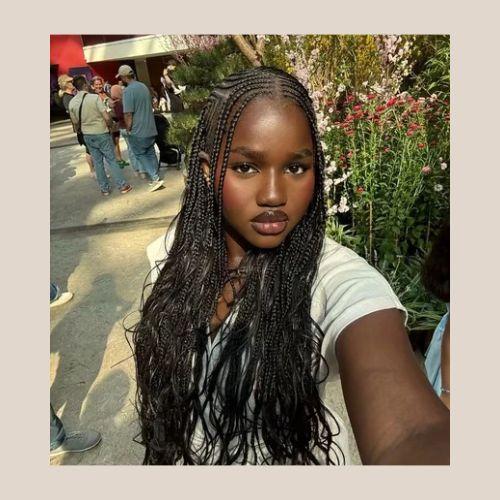
Image source: @Pinterest
Fulani braids come from the Fulani (also called Fula) people of West Africa and the Sahel. The style is built on center braids, cornrows at the sides, and rings, beads, or cuffs. OkayAfrica traces the braiding history behind it.
Compared with basic cornrows, it mixes techniques: close to the scalp at the front, individual braids or a different pattern at the back. Size, color, length, and accessories can all change, which is what makes it so adaptable as a protective style.
10 Fulani Braids Styles to Inspire Your Next Look
Once you know the structure, you start noticing how far people stretch it. These 10 come up in salon chairs constantly, and no two feel the same.
Fulani Braids with Curls
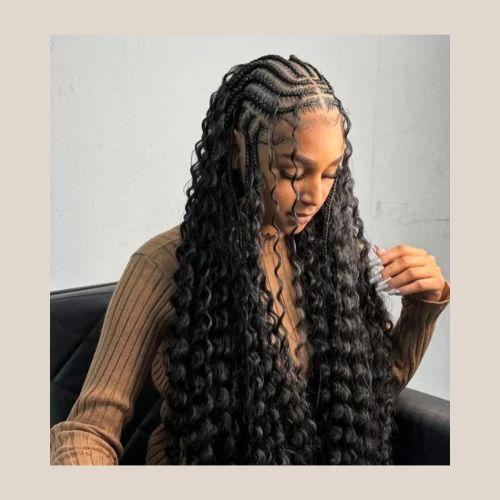
Image source: @Pinterest
Straight ends are the default until you see this version and stop wanting them. The top half of each section gets braided; the bottom left loose in hair that's already curled, usually deep wave or water wave. Softer, and it photographs better. Costs you another 30 to 45 minutes in the chair.
Side Part Fulani Boho Braids
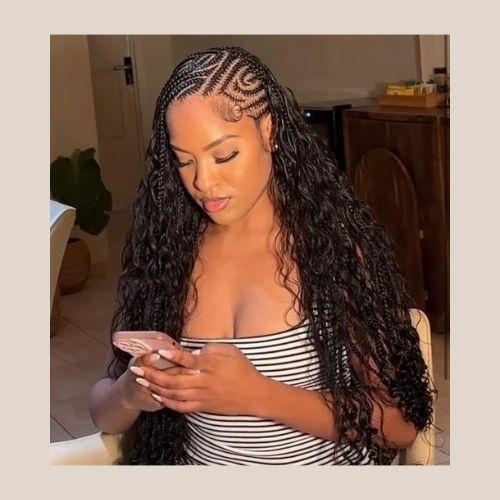
Image source: @Pinterest
Boho braids are deliberately left loose, so nothing looks too perfect. Add a side part and the style turns asymmetric, which flatters square and round faces alike and softens a hairline you're not too thrilled with. Oddly, it looks best around day ten.
Flip Over Fulani Braids
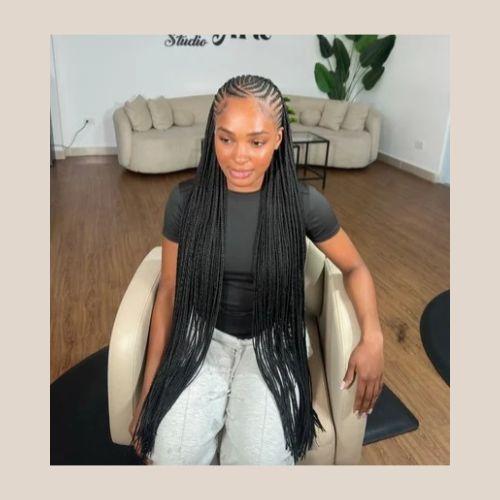
Image source: @Pinterest
No visible scalp, no part. Work starts at the back and moves forward, each braid flipped so it finishes in front. Hair looks thicker than it is, which helps if yours is fine or you're covering a thin patch, and re-parting later won't disturb the look. The trade-off: it looks a little puffy for the first day or two while it settles.
Fulani Braids with Beads
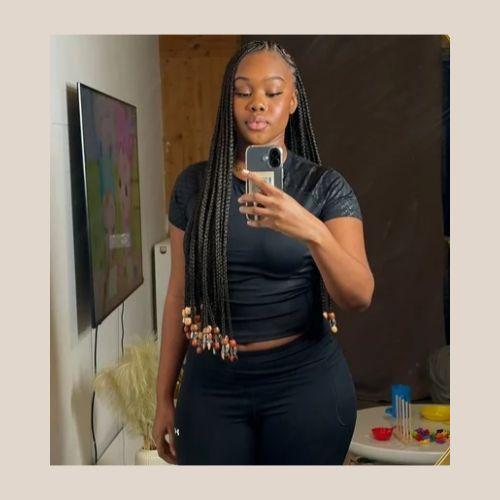
Image source: @Pinterest
When people think of Fulani braids, this is one that everyone imagines. Wooden, plastic, metal, or clear beads get threaded onto the front braids, then fixed with a small elastic or a sealed end. When twisted, they make a soft knocking sound. Gold and clear are more subtle, while more vibrant colors are for those who want to be seen.
Jayda Wayda Fulani Braids
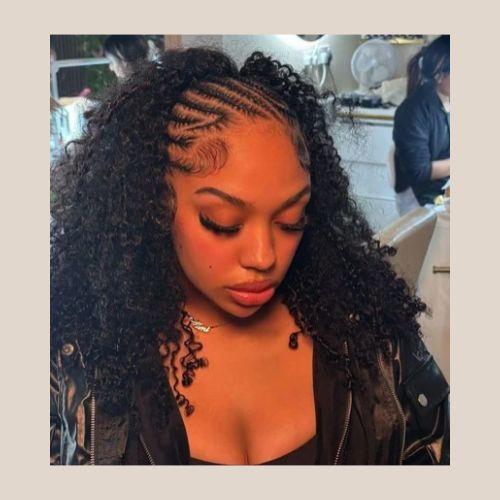
Image source: @Pinterest
Named for Jayda Wayda, who rarely wears anything else. Sharp center part, feed-in cornrows at the front, waist-length braids at the back, not a bead anywhere. It's all shine and length, which is the whole point. The catch is that it eats hair and time- five hours or more, so keep your afternoon free.
Fulani Braids with Heart Designs
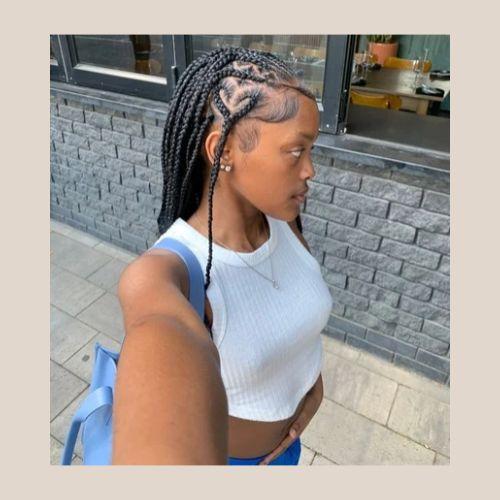
Image source: @Pinterest
Braided into one or both sides, a heart-shaped part outlined in the parting does the job of an accessory. It gets mapped out before braiding starts, and it needs medium to large braids to stay sharp. Best for Valentine's, birthdays, and other holidays. This is the actual screenshot people bring in.
Fulani Braids with Half Wig
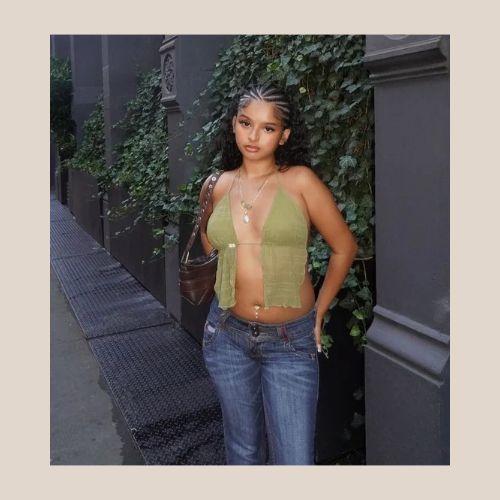
Image source: @Pinterest
Half natural, half wig. The front keeps real Fulani cornrows while a half wig covers the back, blending at the crown and clipping in without glue. You save on chair time and hair, though the leave-out needs re-blending every week or two, and the piece should come off at night.
For a natural, easy-to-style look, choose a human hair half wig with a texture that matches your leave-out. Ensure a comfortable, secure fit for seamless, glueless integration with your Fulani braids.
Fulani Braids in a Ponytail
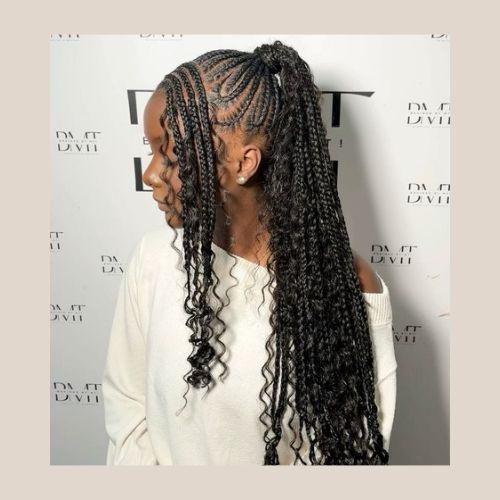
Image source: @Pinterest
To achieve the ideal Fulani braid silhouette, sweep your long braids up high to achieve a cool neck in August and have every bead on show. Keep it neat in front, or it will no longer be a Fulani braid but a generic ponytail. As with many styles, use a scrunchie to avoid breaking older braids at the tie.
Fulani Braids Updos
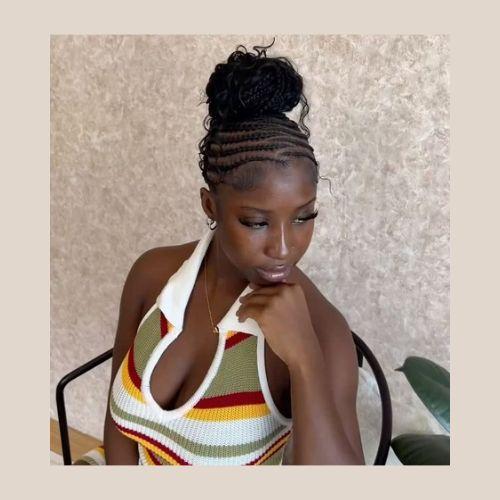
Image source: @Pinterest
A bun at the crown, two braids crossed and pinned, a low chignon at the nape. Same braids, just dressed for a wedding or a work event, and tucking the ends away hides frizz for another week or two. Try it while the braids are still stiff enough to hold.
Mixed Color Fulani Braids
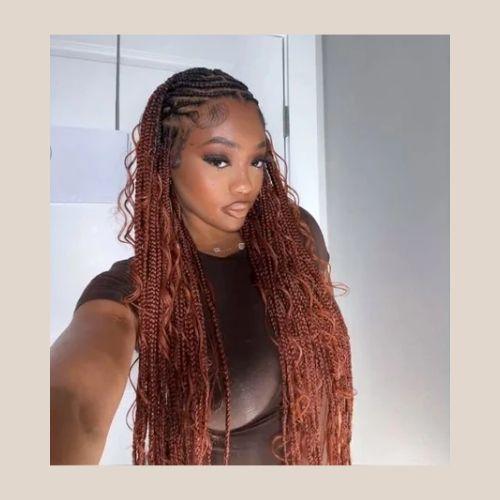
Image source: @Pinterest
To make it look like it’s truly yours, the most budget-friendly option is to have two colors in one hair. Honey blonde on top of black, caramel on top of brown, or a few burgundy accents around the face, with the rest being neutral. Because only the extended hair is colored, you can choose a color you wouldn’t necessarily wear yourself.
How to Choose the Right Fulani Braids?
Four things decide how the next six weeks go: size, length, color, and what your hair will put up with. Get them settled at the consultation, and most of the week-three regret never happens.
Braid Size
- Small braids run four to six hours, but they hold their shape longest and leave room for detailed front patterns.
- Medium is where most people land: three to five hours, and still tidy at week five.
- Jumbo takes two or three hours, grows out fast, and pulls hardest at the roots, so treat it as a short-term style rather than a month-long one.
Length
- Chin to shoulder is the light option: cheaper, easier to sleep on, kinder to your edges.
- Mid-back is the middle ground — long enough to pull into a ponytail, not so long it becomes a whole project.
- Waist-length is drama, and it costs an extra pack or two plus real weight at the gym.
Color
- Black (shade 1 or 1B) disappears into almost any hairline and goes with everything.
- Warm browns (2, 4) lift the look without shouting. Blonde (27, 30, 613) is a statement, and the bleach never touches your own hair.
- Burgundy is a fall mood. If you're unsure, ask for a single accent color at the front and keep the rest neutral.
Hair Type and Scalp
- Fine or thinning edges: skip jumbo and waist-length weight. Tension alone wears down a fragile hairline over time.
- If your scalp is sensitive, say so before the first section is parted — tension can come down without the style going soft.
Get any dermatitis or psoriasis flare-up calmed down first; six weeks under braids makes an angry scalp much harder to treat. Mayo Clinic's overview of seborrheic dermatitis covers what to look for.
How to Maintain Fulani Braids?
- Wash the scalp, not the length: diluted shampoo along the parts every week or two; rinse, dry fully.
- Light oil or braid spray every few days. Heavy butters go gummy at the root.
- Satin bonnet or silk scarf at night. Cotton roughens the cuticle and starts the frizz.
- Mousse or edge control along the parts, then a scarf for fifteen minutes. Not overnight.
- Snug, never painful. Headache or sore spots mean it's too tight. Say something before the install is finished.
FAQs About Fulani Braids
Are Fulani Braids and Tribal Braids the Same?
Fulani braids are a type of tribal braid, but not all tribal braids are Fulani. Tribal braids are a general term for styles drawn from different African braiding traditions, and Fulani is one specific pattern within it: cornrows at the center or side, braids hanging by the ears, often with shells or beads.
Are Fulani Braids Suitable for All Hair Types?
Type 3 and 4 hair holds the style best. Looser or straighter textures can wear it too, but it slips sooner and needs more grip from the extension hair or a tighter braid. If you're unsure, book a consultation. A stylist can tailor the pattern to your hair.
How Long Do Fulani Braids Last?
Typically four to six weeks, up to eight with good care. Past that, you're looking at product buildup, matted roots, and new growth locking into the braids. Your scalp usually complains before you notice.
Do Fulani Braids Damage Your Hair?
Not inherently. Your ends get a break while the style is in. The trouble comes from weight your edges can't carry, or months without a redo. Improper installation damages hair; braids don't.
How Much Do Fulani Braids Cost?
From $80 to $250 in most US cities, a wide range because your stylist's rate, your location, and the size and length of the braids all move it. Small braids with curly ends or a heart design sit at the top; jumbo braids in a smaller city near the bottom. Ask when booking if beads are included.
What Hair is Used for Fulani Braids?
Most commonly, synthetic Kanekalon. It's lightweight, cheap, and grips the hair well. Curly ends need pre-curled hair such as deep wave or water wave, since the ends stay loose rather than braided. Human braiding hair is an option if you want something softer and easier to restyle, though it costs noticeably more.
Can You Wash Fulani Braids?
Yes, and you should. Dilute sulfate-free shampoo on the roots and scalp, then rinse and let the suds run down the length rather than scrubbing the braids. Dry fully under a hooded dryer or let it air out before tying anything over it, or you'll be smelling something off within a week.