
After a long day, taking off your wig might be the last thing on your mind. Whether you're traveling, staying over at a friend's house, or simply too tired to remove it, you may wonder: Can you sleep in a wig? The answer is yes, but it depends on the type of wig you wear and how you care for it overnight. In this guide, we'll cover the pros, cons, and best tips for sleeping in a wig safely.
What Happens If You Sleep in a Wig?

Image source: Pinterest
Wearing a wig while sleeping can lead to some issues. As your head moves against your pillow, your wig is exposed to a hostile environment. Sleeping in a wig every night can bring about the following issues:
- Tangling & Matting: Your hair rubs against your pillow all night, twisting into knots. Long or curly wigs? The nape of your neck will be a matted mess by morning.
- Frizz & Loss of Style: Overnight friction flattens your volume, messes up your curls, and leaves you with frizz. Hello, long re-styling session the next day.
- Shorter Wig Life: Nightly friction wears down the fibers, loosens knots, and causes more shedding. Your wig will look trashed way too fast.
- Scalp Issues: Wearing a wig 24/7 traps sweat and product under the cap. That means itchiness, breakouts, or even fungal problems.
- Hairline Stress: If your wig shifts or is too tight, sleeping in it pulls on your edges all night. That constant tension can damage your natural hairline over time.
Which Types of Wigs Are Best for Sleeping?
If you occasionally need to sleep in your wig — maybe while traveling or just for convenience — some types handle it much better than others.
Glueless wigs are usually the most sleep-friendly. They use adjustable bands or combs instead of glue, so there's less tension on your scalp and hairline. That means they feel lighter and more breathable when you're trying to sleep.
Headband wigs are another solid option. They're lightweight and don't rely on lace or adhesive, which makes them way more comfortable and less irritating for short overnight use.
Short wigs and bobs — like pixie cuts or chin-length bobs — also work really well. There's simply less hair to rub against the pillow, so you're less likely to wake up with tangles, and they're easier to fix in the morning.
How to Sleep in a Wig Without Ruining It
While it is not recommended to sleep in your wig, the following steps can be taken to minimize the damage that the wig can do to your hair:
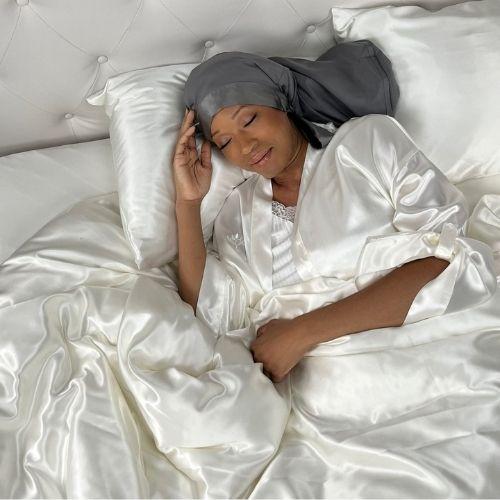
Image source: Pinterest
- Wrap your hair before sleeping. Wearing a silk or satin scarf around your wig can help to secure it and prevent the hairline from shifting.
- Use a satin pillowcase. Using a cotton pillowcase will cause your wig to rub against your pillowcase. Instead, use a satin pillowcase for the best sleeping experience with your wig.
- Braid your hair before sleeping. Long hair can't tangle against your pillow. Braiding your hair before you sleep, this will limit the amount of tangling that occurs when you are sleeping.
- Do not sleep in tight styles. Sleeping in braid styles or up styles may damage the wig and your natural hairline.
- Ensure that your wig and natural hair are clean. Since you will be sleeping in your wig for extended periods, you will need to ensure that both your wig and your natural hair are washed and conditioned regularly.
How to Protect Your Natural Hair While Sleeping in a Wig

Image source: Pinterest
In addition to caring for your wig while sleeping, there are some tips that will ensure that your natural hair is protected:
- Keep your natural hair clean. Ensure that the natural hairline on your scalp is regularly cleansed of the adhesive and oils that will collect with time.
- Moisturize your natural hair. Your natural hair must be moisturized before sleeping.
- Wear protective braids. These will help to even out the weight of the wig while sleeping and prevent your natural hairline from tangling.
- Take breaks from wearing your wig. Even if you have a glueless wig, you should take it off whenever you can to allow your natural hair to breathe.
FAQs About Sleeping in a Wig
Is It Bad to Sleep in a Wig Every Night?
Sleeping in a wig every single night can lead to the following issues: it can cause your wig to tangle, your hair to frizz, and your wig to shed more than it should. Additionally, it can prevent your scalp from breathing while sleeping. Wearing a wig while sleeping is not ideal. It is best to remove your wig before sleeping.
Can You Sleep in a Glueless Wig?
You can sleep in a glueless wig. In fact, they are the most comfortable wigs since they do not weigh down on your scalp as the adhesive on other types of wigs does. However, the best practice is to remove the glueless wig while sleeping every once in a while for your comfort and the wig’s lifespan.
Can You Sleep in a Lace Front Wig?
Yes, you can sleep in a lace front wig. However, it is not the best choice for your wig since the friction against your pillow can potentially damage the lace of the wig. When sleeping in a lace wig, cover the lace with a silk scarf to reduce the friction against the lace.
How Do I Keep My Wig from Tangling at Night?
The best way to keep your hair from tangling in your sleep is to ensure that your hair is secured. This can be done by braiding the hair before sleep or placing it into a low bun. Additionally, sleeping on a silk or satin pillowcase can significantly reduce the amount of tangles that your hair will experience during sleep.
Should I Wear a Bonnet Over My Wig?
Yes, wearing a silk or satin bonnet over your wig is a great way to protect the wig while sleeping. Not only will it help minimize the friction against your wig, but it can also help to maintain your hairstyle.
Can Sleeping in a Wig Cause Hair Loss?
Sleeping in a wig will not directly cause hair loss. However, if your wig is too tight or if you leave it on your natural hair continuously, this could cause hair loss due to the constant tension against the natural hairline.
What Wigs Are Most Comfortable for Sleeping?
Glueless wigs, headband wigs, and short wigs are some of the most comfortable wigs for sleeping. These wigs will not place stress or friction against the hairline or scalp and will allow your hair to remain as tangle-free as possible during sleep.
Final Thoughts
While it is possible to sleep in your wig, it is not recommended. So, next time you find yourself wondering if you can sleep in your wig, remember to give it a rest while you sleep. If you must sleep in it, rely on a comfortable glueless or headband wig, wrap it securely in silk or satin, and sleep on a smooth pillowcase. Your wig will look beautiful for longer, and your natural hair will thank you!