
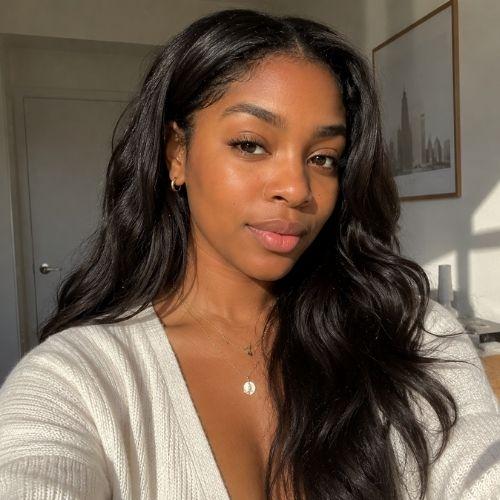
Ever noticed those wigs on TikTok and Instagram where the hairline just looks... real? That's a Lagos hairline, and the trick is deceptively simple. Standard frontals come with dense, perfectly straight hair that makes the lace practically glow. A Lagos line is shaped by hand instead — the edge is contoured, the density thinned out strand by strand, until the lace stops being the first thing you see. The result is the kind of install that reads as your own hair. Curious how it differs from a regular hairline, or whether you can pull one off yourself? Let's get into it.
What Is a Lagos Hairline?
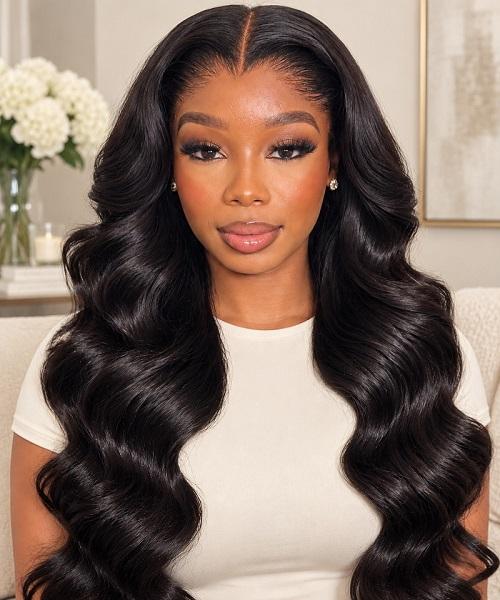
Image: Image by UNice
A Lagos hairline is a customized wig hairline shaped by the beauty and styling trends of Lagos, Nigeria. What sets it apart is a contoured shape, reduced front density, and a finish that looks natural rather than obviously applied.
Rather than tracing one perfectly straight line, the edge is shaped with subtle peaks, curves, and dips. Depending on the stylist and the look you're after, that might be a soft M-shaped contour, a subtle widow's peak, or barely any baby hairs.
The point is to make the wig read more like hair growing from the scalp than a hairpiece sitting on top of it. That takes careful plucking, shaping the hairline by hand, and lace blended so the transition looks seamless.
What Makes a Lagos Hairline Different?
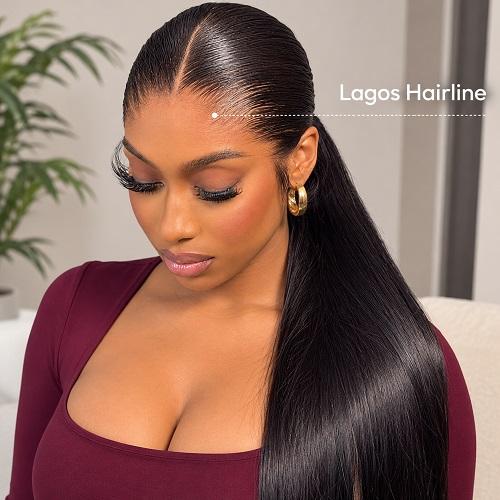
Image: Image by UNice
A Lagos hairline stands out mostly because of how much thought goes into its shape and density. Here's what actually sets it apart.
A Defined, Contoured Shape
Perhaps the most distinct feature is the unique contour. Rather than having a straight or excessively rounded hairline, this hairline features gentle rounding and irregularities that make the whole edge read as natural.
Some have a distinct M shape or a gentle widow's peak. Others may have a more subtle one that can be defined based on the individual's face.
Lighter Density at the Front
Similar to many natural hairlines, individuals typically have thinner, less dense hair at the front of their heads compared to the hair at the back. To achieve this look with a Lagos hairline, some hair is carefully plucked from specific areas.
By gradually changing the density of the hairline, it avoids looking too thick or fake.
Minimal or Customized Baby Hairs
Unlike many hairline styles that feature dramatic swooped baby hairs at the front, Lagos hairlines tend to keep theirs relatively clean.
Some choose to add some thin baby hairs to soften the hairline at the front, while those who prefer a cleaner look may choose to have little to no baby hairs visible. Both options can be chosen based on personal preference.
Seamless Lace Blending
Beyond having a properly defined hairline, another important factor in looking natural is how the lace blends with the individual's skin.
Correctly positioned lace, appropriately colored lace, and neatly tied knots can all lead to a natural hairline. Even if the hairline itself is perfectly customized, overly visible lace can still make it look fake.
Lagos Hairline vs. Traditional Wig Hairline
The main differences between a Lagos hairline and a traditional wig hairline come down to shape, density, and styling details.
| Feature | Traditional Wig Hairline | Lagos Hairline |
| Hairline Shape | Often straight or evenly curved | More contoured, with subtle peaks, curves, or an M-shaped outline |
| Hair Density | May have thicker or more uniform density at the front | Features lighter density at the front that gradually blends into fuller hair |
| Baby Hairs | May include styled baby hairs in different shapes and amounts | Often keeps baby hairs minimal or skips them for a cleaner finish |
| Customization | May need extra plucking and shaping to achieve the desired look | Focuses on personalized shaping and a more defined contour |
| Overall Appearance | Can look natural when properly customized and installed | Aims for a softer density transition and a distinctive, natural-looking finish |
Not everyone prefers a highly customized hairline. If you like a more classic look with a simple, clean shape, traditional lace front wigs are still a great option. They offer plenty of styling possibilities and can be customized to match your preferences. Explore the UNice wig collection below to find a style that fits your everyday look.
How to Create a Lagos Hairline on a Wig?
Want to try this look on your own lace wig? The process takes patience and a light touch. Before you start, make sure you have a suitable wig and the basic tools for customization.
Step 1: Choose a Suitable Wig
Start with a lace front wig that gives you enough room to customize the hairline. A 13x4 or 13x6 lace frontal wig can offer more flexibility when shaping the front and adjusting the part.
A pre-plucked wig is also a good starting point because some excess density has already been removed. However, you may still need to make small adjustments to get the shape you want.
Step 2: Plan Your Hairline Shape
Before plucking, look at your natural hairline and decide how you want the wig to frame your face.
Consider the following:
Forehead shape: Think about how low or high you want the hairline to sit.
Temple area: Pay attention to how the hairline curves around the sides.
Natural peaks: Decide whether you prefer a subtle M-shaped contour or a softer, rounded shape.
Personal style: Consider whether you want a clean finish or a few baby hairs.
Avoid copying someone else's hairline exactly. A shape that looks great on one person may not create the same effect on another.
Step 3: Pluck the Hairline Gradually
Use a pair of tweezers to remove excess hair from selected areas along the lace.
Start with small sections and work slowly. Focus on creating a softer density transition rather than removing too much hair from one spot.
Keep checking the shape as you go. A little unevenness can make the hairline look more realistic, but noticeable gaps or bald patches can be difficult to fix.
Tip: Remove a few strands at a time instead of plucking large sections. You can always make further adjustments, but you cannot easily put removed hair back.
Step 4: Customize the Baby Hairs
Baby hairs are optional, so you don't need to create dramatic edges to achieve a Lagos hairline.
If you prefer a softer finish, leave a few fine strands along the front and style them lightly. If you want a cleaner look, keep the hairline neat without adding extra swoops.
The key is to avoid making the front look too heavy or overly styled.
Step 5: Install and Blend the Lace
Once the hairline is customized, it's time to install the wig.
Position the lace carefully along your hairline and use a suitable adhesive or glueless installation method. Make sure the lace sits flat against your skin without visible lifting.
A melting band can help secure the lace while it sets. You can also use a small amount of styling product to keep the front neat.
Finally, check the hairline from different angles. The lace, knots, and hairline should work together to create a natural-looking finish.
FAQs About Lagos Hairline
Is a Lagos Hairline the Same as a Natural Hairline?
No. While inspired by West African hairlines, it is not a copy of any one person's edge, but a softened, stylized version. Compared with a standard lace front, it has a slightly softer, lower edge. Additionally, natural hairlines can change based on how you style your hair, while this one stays put (until you choose to restyle).
Can I Make a Lagos Hairline on Any Wig?
Generally, any lace front wig can be created to have this hairline style, mainly depending on the wig's construction — you'll want a front that is sufficiently wide to both pluck and trim while also having enough hair along the edge to pluck without revealing bare lace. If the front was heavily plucked when it was created, you may run out of hair to work with. For a closed cap, there is no lace that can be melted.
What Face Shapes Can Have a Lagos Hairline?
Because this hairline features a lower, framing edge, it can likely benefit longer or broader forehead shapes, as it will effectively reduce the space between your brows and the hairline. Additionally, the soft dip at the temples can be used by individuals who do not desire a hard angle. For those with a short or round face, do not push this too low because it will make the face appear more crowded in proportion; ultimately, people can best rely on their own hairline for guidance.
How Do I Care for My Lagos Hairline after I Style It?
When reinserting this hairline, be gentle: do not run a comb through the delicate hair right above the lace, use minimal tension towards the temples, and keep adhesive off the hair itself — apply it to the lace or skin side only. If the lace becomes separated, briefly re-melt it using low heat so you can refresh the shape each time you wear the wig.
Is a Lagos Hairline the Same As an M-shaped Hairline?
While many Lagos hairline options do feature an M-shaped outline, it is not solely defined by this attribute. Other important considerations include how the lace is blended, how the hairline is customized, and the density of the hair.