
You do the whole routine on wash day, and by the next morning your hair already feels dry again. If that sounds like your week, the problem is probably not how much you use. It's what goes on first, what stays on to hold the water in, and how you treat your hair overnight. Below is a simple routine that keeps 4C hair soft well past day two.
Why 4C Hair Dries Out So Fast?

Image source: @Pinterest
A 4C strand doubles back on itself in a Z shape. Every one of those bends lifts the cuticle a little, and water slips out through the small openings that follow. Sebum has the same problem in reverse. It travels down the coil from the root, and by the time it gets anywhere, the first third of the strand has already used it up.
The protective lipid layer - which contains a fatty acid known as 18-methyleicosanoic acid (18-MEA) - naturally renders the hair strand water-resistant. This protective layer can erode with washing, chemical treatments, heat, and daily friction, making damaged areas of the hair strand vulnerable to moisture loss.
A few other things speed up the loss:
- Frequent manipulation. Every detangle, brush, or restyle drags friction across the strand, and friction is what lifts the cuticle scales that should be lying flat.
- Weather and indoor heating. Wind, cold, and dry indoor air pull water straight out of the fiber. Heated rooms do it faster than most people expect.
- Heat styling. A blow dryer or flat iron turns the water inside the cortex into steam, and that steam chips at the cuticle on its way out.
- Product buildup. Silicones, waxes, and heavy butters coat the surface. Whatever you apply next sits on top of the coating instead of getting through.
- Skipping deep conditioning. Hair cannot rebuild the lipids and protein it loses on its own. Without a periodic deep condition, the fiber keeps running a deficit.
| What You Notice | Dry (Low Oil) | Dehydrated (Low Water) |
| How It Feels | Rough, dull, flyaway | Stiff, snaps when bent |
| After a Water Rinse | Feels better for a day | Feels like straw again by evening |
| What Helps | Emollients, followed by a sealing product | Water first, followed by a sealing product |
Dry and dehydrated are not the same thing, even though people swap the words freely. Dry hair is short on oil — it looks rough and dull, and it flies everywhere. Dehydrated hair is short on water inside the cortex. It goes stiff, snaps before it stretches, and turns to straw again by evening. Most 4C hair is dehydrated but gets treated as dry, so it keeps collecting oil while the water problem goes nowhere.
The Right Layering Order to Keep 4C Hair Moisturized
Order is where most routines go wrong, and fixing it costs nothing.
The Four Layers of Moisture: Water, Leave-In, Cream, and Oil
Each layer has one job. Water is the only thing that actually hydrates. Humectants keep that water pressed against the fiber, emollients soften the cuticle, and occlusives slow evaporation down. Most leave-ins already carry a humectant, which is why the water step and the humectant step usually get folded into one. The jobs are still different, though, and it helps to think of them separately.
LOC vs. LCO: Which Method Works Best for Your Hair?
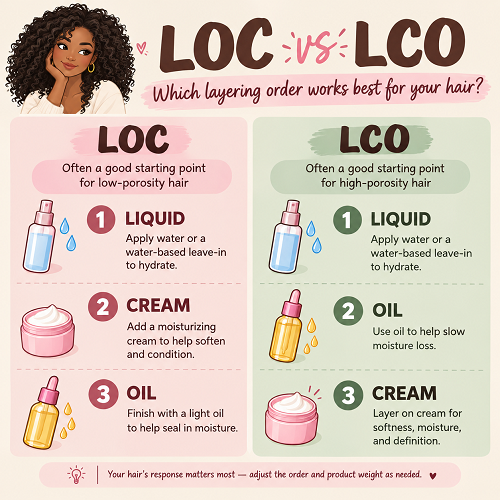
Image: UNice
High porosity hair does better with LOC and low porosity with LCO, no matter how many blogs claim the opposite. A lifted cuticle lets water pass in and out quickly, so sealing with oil right away makes sense. A tight cuticle takes water in slowly, and oil applied too early just blocks the cream from ever getting through. Porosity sets the pace; strand thickness decides whether a heavy product flattens things. Learn more about the LOC vs. LCO method to find the right layering order for your hair.
Your Wash Day Routine, Step by Step
Water only gets in on wash day, so these six steps matter more than whatever you reach for midweek.
Pre-Poo Before Shampooing
Give yourself twenty minutes before you even step into the shower. Oil goes on dry hair, ends first — shampoo has less to strip that way, and detangling gets easier. Work in sections, then finger-detangle from the bottom up. Starting at the root is how knots get worse, not better. If you prefer warm oil, the AAD suggests keeping it to about twice a month.
Cleanse Your Scalp Without Stripping Your Hair
Shampoo comes every one to two weeks, and sulfate-free is the way to go. Foam it up in your palms, then work it into the scalp with your fingertips — not your nails. The suds that slide down when you rinse are plenty for the lengths, since that's where buildup actually sits. Piling hair on top of your head and scrubbing roughs up the cuticle, which the AAD warns against. Go heavy on products? A clarifying wash now and then helps.
Deep Condition With Heat
Twenty minutes under a plastic cap with some gentle heat is the standard here. Check the label for ceramides, hydrolysed protein, or honey. Heat lifts the cuticle just enough for those to get in, and that's what decides how much water your hair holds afterward. Spread it from mid-length down to the ends. Whatever the bottle says, stick to that time — leaving it on longer doesn't make it work harder. Then rinse it all out properly.
Apply Leave-Ins While Hair Is Damp
This is the step people mess up most. The cuticle stays open while the hair is wet and closes as it dries, so work in sections and apply while the hair is still dripping. If it's sopping wet, squeeze the excess out first. What you want is water inside the strand for the product to spread over, not a puddle on the bathroom floor.
Seal in Moisture in 4–8 Sections
Four sections at the minimum, eight if your hair is dense, and finish every layer on one section before moving to the next. Cream and oil go on in small amounts, ends first — they're the oldest fiber you have and the driest. Piling on more product doesn't buy more moisture, either. It just leaves more residue for you to wash out next week.
Set Your Hair Before It Dries
Low-manipulation styles are what hold all this work in place: two-strand twists, flat twists, loose braids, braid-outs, twist-outs. Stretched strands touch their neighbors less, and less contact means less friction and fewer ways for water to escape. Wait until the hair is completely dry before the scarf goes on. A bonnet over damp hair just traps that moisture against your scalp all night.
How to Refresh 4C Hair Between Wash Days?
Refreshing and washing are two different jobs. Mix them up, and you end up with hair that's somehow both dry and gummy.
When to Use Water vs. Leave-In Conditioner
Water comes first, always — it's the only thing that actually adds moisture. If the hair still feels dry a minute after you mist it, follow with a little diluted or lightweight leave-in. Ends that stay rough after that get a dab of cream. What you never do is run the whole LOC or LCO sequence every day. A refresh replaces the top layer and a half, not all four.
How to Refresh Without Product Buildup
Separate the hair gently with your fingers, mist only the sections that actually feel dry, smooth a little leave-in over the ends, and restyle without combing everything back out. If the hair starts to feel greasy, sticky, or coated, adding more product won't fix it. The layers are building up faster than they wear off, and the only real fix is a proper wash.
Quick Moisture Tips for Busy Mornings
Short on time? Work on the spots that show dryness first instead of soaking the whole head:
- Refresh the ends only. They're the oldest fiber, they dry out first, and they're the part people actually see.
- Use a water-based leave-in. It softens within minutes. Oil-based products just sit on the surface.
- Keep a spray bottle premixed. Distilled water with a few drops of leave-in next to the mirror turns a five-minute routine into a thirty-second one.
- Wear a style that forgives a skipped morning. Twists or braids set properly on wash day can go without daily restyling.
You're maintaining your hair, not restarting the whole routine every morning.
How to Keep 4C Hair Moisturized Overnight?
Eight hours is a third of your day, and for most of that time your hair is pressed against fabric. Which fabric it is matters more than most people think.
Satin Bonnets, Silk Scarves, and Pillowcases

Image source: @Pinterest
A bonnet is the all-rounder: it holds twists in place and covers loose hair. A scarf works better for shorter hair and sits flatter under a cap. And a satin pillowcase is for the people who know they won't keep either one on past midnight. Cotton pulls water out of the hair the entire time they're in contact — that's eight hours of slow extraction.
Protecting Your Ends While You Sleep
Your ends are the oldest and most porous part of the strand, which is why they dry first and stay dry the longest. At night, seal them twice — cream, then butter — tuck them under, and twist them into six to ten loose twists so they stay put while you sleep.
How to Keep 4C Hair Moisturized Under a Wig?
Wearing a wig doesn't mean skipping the routine. It means moving it around, because most of your hair is now out of reach.
Moisturizing Your Hair Before Installing a Wig
Install day decides how the next six weeks go. Wash and deep condition, apply leave-in and cream while the hair is still damp, seal, then let everything dry completely before braiding. Dampness trapped under a wig is how the itching starts. Braid loose enough that they still feel comfortable an hour later. The AAD puts it plainly: if it hurts, it's too tight.
Protecting Your Natural Hair Under Wig Caps
Under the cap, you can reach the scalp and the parting, but not the lengths, so the four layers shrink to about one and a half. Thin leave-in along the part, a little oil on top, and stop there. A glueless wig keeps adhesive away from your hairline. A V part wig leaves some hair out right where you'd mist it, and a kinky curly texture wig blends that leave-out without any heat.
Frequently Asked Questions about Moisturizing 4C Hair
Can You Moisturize 4C Hair Too Much?
Watch for mushiness, not extra moisture. Hair that stretches and doesn't spring back is dealing with a water-protein imbalance. The fix is a light protein treatment once a month and easing up on the cream.
Is Water Alone Enough to Moisturize 4C Hair?
Water is what adds moisture, and it's also the first thing to leave. On its own, it evaporates within hours and takes the slip with it, so mist first and then seal.
Should You Moisturize 4C Hair Every Day?
Only if the hair asks for it, if it still bends on day two without going crunchy, misting every day just resets a seal that was already doing its job.
Does Oil Actually Moisturize 4C Hair?
No. Oil is occlusive, which means on dry hair it locks the dryness in. Put it on damp hair after a water-based layer, and it finally has something worth sealing.
LOC or LCO — Which Is Better for 4C Hair?
Porosity decides. High porosity takes LOC; low porosity takes LCO. Can't tell which yours is? Run the feel test on two sections and compare them on day three.
Can You Moisturize 4C Hair in Braids or Twists?
Yes, but only where you can reach. Mist the parting, add a little oil, and leave the braided length alone. Taking a section down to re-braid it does more damage than the dryness ever would.
Why Does My 4C Hair Feel Dry Right After Moisturizing?
Usually, the hair was half dry when you applied. Other times, the first ingredient on the label isn't water, or the humectant is pulling moisture the wrong way in dry air. Check them in that order.