Hair Toner 101: The Subtle Secret Behind Great Color
Every good hair color has a finishing touch, and more often than not, it’s toner. It doesn’t make a big entrance, but it’s the reason hair looks cooler, cleaner, and more refined after a salon visit. Whether your goal is icy blonde, soft caramel, mushroom brown, or simply “no brass, please,” a good toner can make all the difference. This guide walks through how toning works, how to use it properly, and the questions people often ask once they start using it.
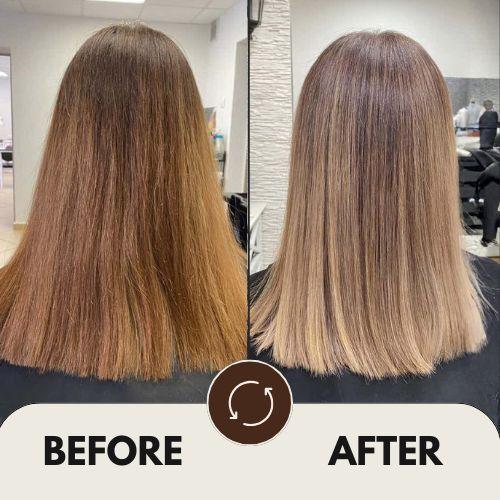
Image source: Pinterest
What Does Toner Do to Hair?
Toner adjusts the undertone of your hair color. It doesn’t usually change the shade dramatically — instead, it refines it. Think of it as editing the lighting of a photo rather than repainting the entire picture.
It can:
- Neutralize brass or orange tones
- Add ash, pearl, or warmth depending on your desired finish
- Restore shine and softness after bleaching or coloring
- Refresh faded color without dyeing again
Most toners are demi-permanent or color-depositing formulas, meaning they sit on the surface of the hair instead of lifting your natural pigment. That’s why they’re loved by stylists — they make hair look polished without needing another round of harsh chemicals.
How to Apply Toner to Hair
Applying toner can be salon-fast or totally DIY-friendly — the difference is in product choice and timing. Here’s a simple, professional-feeling routine you can follow at home:
1️⃣Start with a strand test. Always test on a small hair section so you can see the result and timing before committing to your whole head.
2️⃣Wash (or not) depending on the product. Some toners apply to damp, freshly washed hair; others work better on towel-damp hair a day after washing. Follow the toner brand instructions.
3️⃣Mix correctly. If your toner needs a developer, mix in the ratio on the box (often 1:1 or 1:2). If it’s a deposit-only gloss, no developer required.
4️⃣Protect the rest. Apply petroleum jelly along the hairline and wear gloves.
5️⃣Apply evenly. Use a tint brush and apply from mid-lengths to ends first (those lift and brass quickest), then apply to roots if needed. Work quickly to maintain consistency.
6️⃣Monitor closely. Keep an eye on the color during processing (mirror and timer are your friends). Don’t leave it longer than recommended.
Rinse gently and condition. Rinse with cool water and follow with a hydrating conditioner or mask.
Does Toner Damage Hair?
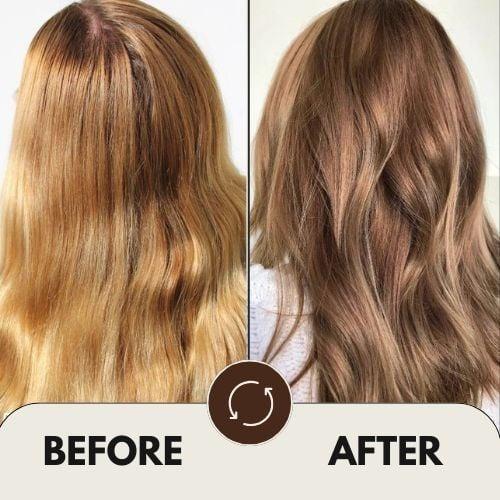
Image source: Pinterest
Toner on its own is usually gentle. Most formulas deposit pigment rather than lift color, so the stress on the hair is minimal. The real damage comes from repeated bleaching, not toning itself.
However, over-toning or using developer-based formulas too frequently can dry out the hair over time. To keep hair healthy, pair toning with hydration or bond-repair treatments, and space color services several weeks apart.
Conclusion
A good toner won’t steal the spotlight — it enhances everything around it. If your color feels almost right but not quite there, toning might be the missing step. And when done right, it often gives you the perfect effect.
FAQs about Hair Toner
How Often Can You Tone Your Hair?
Generally, every 4–8 weeks, depending on how quickly brassiness returns and how healthy your hair is.
How Much Does Hair Toning Cost?
- At-home products: $10–$50
- Salon toning service: $50–$100+, depending on salon level and whether treatment is included.
Can You Retone Hair After Toning?
Yes — but give it a few washes before toning again unless you’re using a gentle color-depositing conditioner.
Can I Bleach Hair After Toning?
You can, but ideally not immediately. If bleaching is your next step, most stylists recommend removing the toner first and checking hair condition before lifting again.
Will Toner Lighten My Hair?
Not usually. Toner mostly adds color to cancel tones; it doesn’t lift the base. Only toners mixed with developer have a mild lightening effect.
Is Toning Hair the Same as Coloring?
No. Coloring changes the base shade; toning fine-tunes it. Think of coloring as painting and toning as polishing.
What Are the Cons of Hair Toner?
- It fades and needs upkeep
- Can build up if used too often
- May give unpredictable results on very porous hair
- Developer-based toners can cause dryness over time
- Not a substitute for bleaching or full coloring