
Shopping for glueless wigs, you've probably run into two names over and over: V part and U part styles. Neither needs glue, lace, or a salon appointment — the real difference is how much of your own hair you leave out. Get that detail wrong, and the blend never looks right; get it right, and nobody can tell it's a wig. This guide breaks down how a v part wig vs u part wig actually compare, plus which one fits your hair, your budget, and your morning routine.
Quick Answer
V part wig vs U part wig — the short version: the V shape has a narrow opening and needs little to no leave-out, so it installs faster and protects more of your natural hair, which makes it the better pick for thin or fine hair. The U shape has a wider opening, about 4 x 2 inches, that lets you leave out more of your own hair and switch between a middle and a side part.
In short: choose the V part for the easiest, most protective install; choose the U part if you have fuller hair and want parting flexibility.
What Is a V Part Wig?
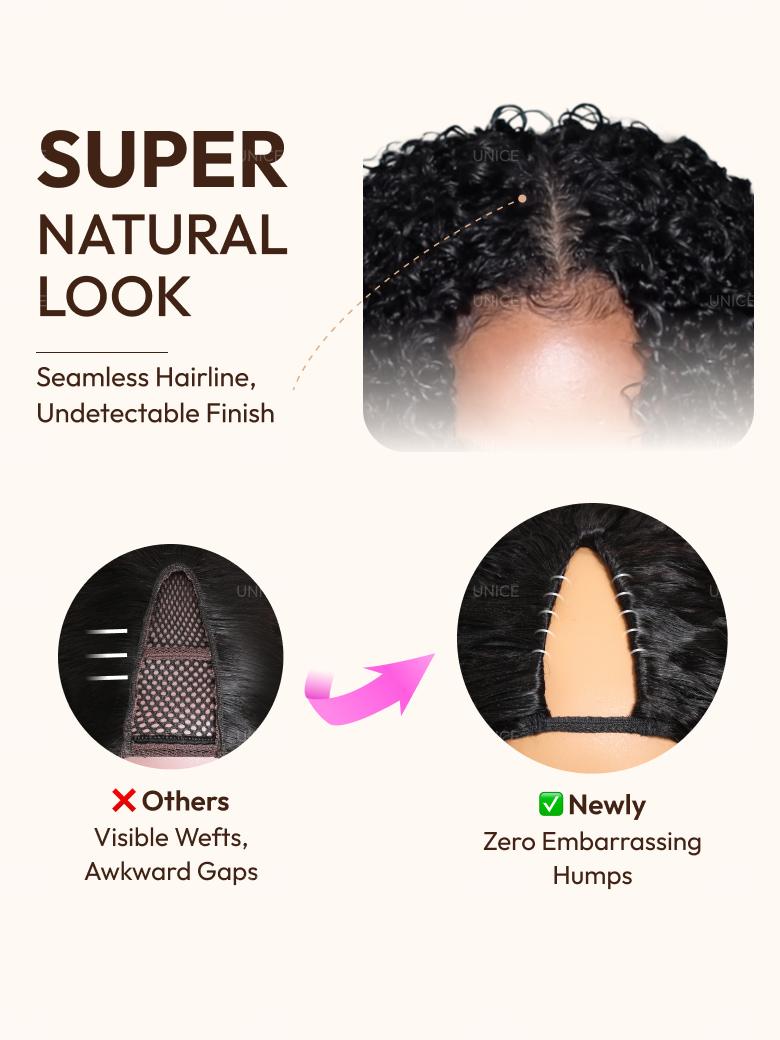
Image: Wig by UNice
A V part wig — also called a thin part wig or V-shaped wig — is a type of wig built with a narrow V-shaped opening at the top. You part your own hair into that V, pull a small section through, and blend it over the wig. The result is a natural-looking part and hairline with barely any of your own hair left out, which is why beginners reach for it first.
What Is a U Part Wig?
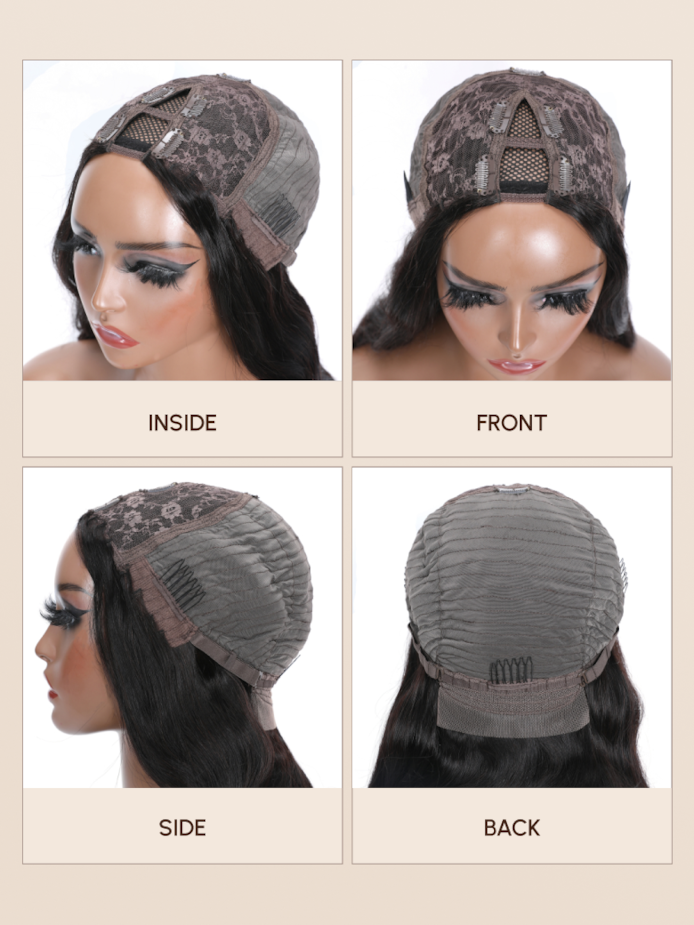
Image: Wig by UNice
A U part wig has a U-shaped opening near the top of the cap. Think of it as a middle ground: easier than a lace front wig because there's no glue and no lace, but it asks for more of your own hair than a V part wig because the opening is bigger.
"U-parts are perfect because [individuals] can learn how much hair to leave out and how to braid their hair down," says celebrity hairstylist Moira Frazier. "They're just a great way to practice in preparation for a full lace or lace front wig they want to indulge in."
What Are the Differences Between the V Part Wig and the U Part Wig?
| Feature | V Part Wig | U Part Wig |
| Leave-Out Needed | Little to none — often just a thin strip | A wider section to blend over the opening |
| Opening Shape & Size | Narrow V-shaped opening, no band | U-shaped opening, about 4 x 2 in. |
| Blend with Natural Hair | Easier to blend without using much of your natural hair | Requires more of your natural hair to be left out for blending |
| Natural Look | Natural finish with minimal leave-out | Very natural look, but needs more of your own hair |
| Protective Styling | Better protection — covers more of your natural hair | Less protective, since more natural hair is exposed |
| Ease of Use | Easy to install and style, ideal for beginners | Needs practice to blend and style effectively |
| Styling Flexibility | Better suited to a fixed part | Allows middle, side, and other partings |
The Shape of the Opening
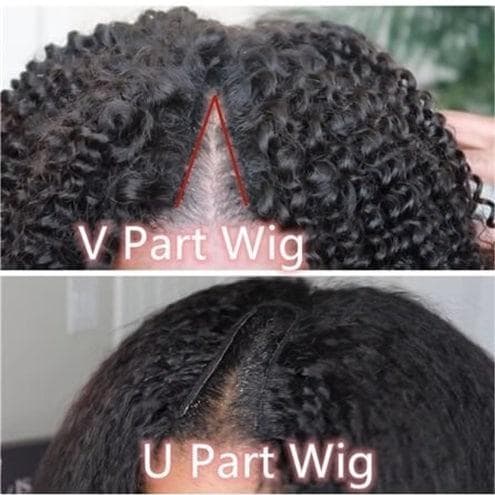
The opening does the real work here: a narrow V versus a roughly 4 x 2 inch U. That gap is exactly why the U style needs more leave-out. In some ways, the V design is the upgrade — it needs little to no leave-out, up to 3/4 less than the U shape, so you can skip the blending hassle and still get a clean, natural part. Want the full breakdown? Read our V part wig leave-out guide.
To Cut the Band — or Skip It
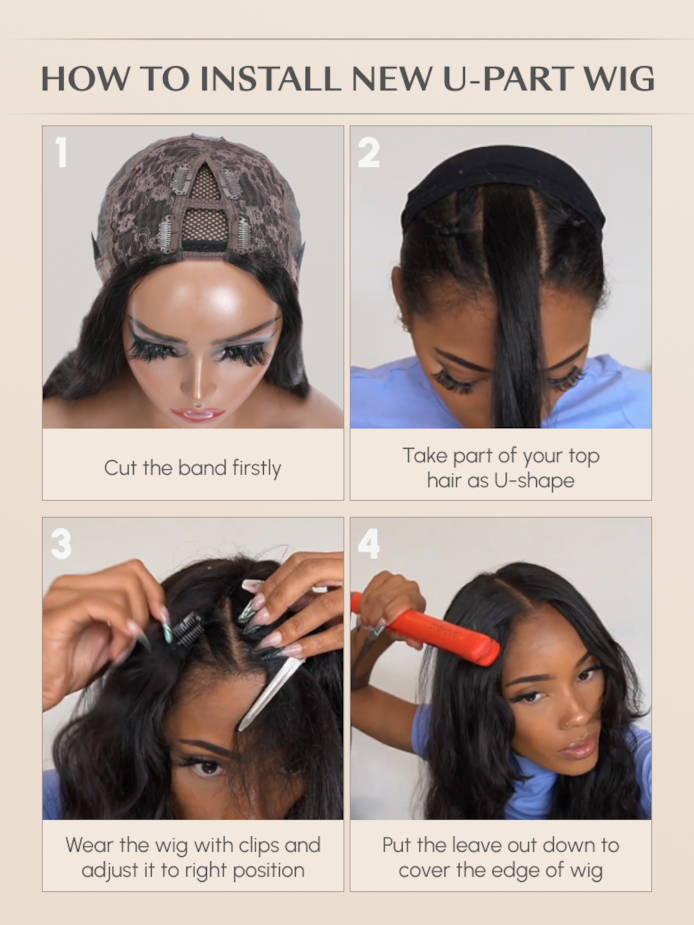
A human hair U-shape wig install starts with cutting the band that runs across the cap. The V style has no band at all, so there's nothing to cut — one less step before you're ready to go.
How Many Combs Sit Inside the Opening

Count the combs, and you'll spot a real difference: the V style holds four combs inside the opening, while the U style has three. More combs usually means a more secure grip across the part, which matters if you move around a lot during the day.
Pros and Cons of a V Part Wig
Here's the honest rundown before you commit.
Pros
- Little to no leave-out, so the install is faster and your natural hair stays protected.
- Beginner-friendly: no glue, no lace, and no band to cut.
- Blends easily even on thin or fine hair.
- Four combs and a drawstring keep it secure without adhesive.
Cons
- Styling is mostly limited to where the V opening sits.
- Less parting flexibility than the U shape.
Pros and Cons of a U Part Wig
Pros
- The bigger opening lets you switch between a middle and a side part.
- Breathable — more scalp exposed means better airflow in hot weather.
- Ideal for full, thick hair you actually want to show off.
- Comfortable enough to wear as a long-term protective style.
Cons
- Needs more leave-out and more blending skill.
- Less forgiving for a total beginner.
V Part vs. U Part: Which Should You Choose?
Both styles make excellent protective styles, so the right pick comes down to your hair and your habits.
- Thin or fine hair? Go with the V style — it covers more of your natural hair and needs almost no leave-out.
- Full, thick hair? The U shape lets you pull out more of your own hair for a fuller, more natural blend.
- Busy mornings or a total beginner? The V part installs the fastest.
- Love switching your part? The U option gives you more freedom to move it.
One word of caution, whichever you choose: heavy or repeated tension on your own hair can cause real damage over time. The American Academy of Dermatology notes that repeated tension can lead to traction alopecia, and research on hairstyles and hair loss from Johns Hopkins points the same way. Keep your leave-out small, avoid tight braiding, and give your scalp a break between installs.
How to Install a V Part Wig vs. a U Part Wig
You can install either style at home in under ten minutes. Here's the short version.
- Prep your hair. Braid or slick your natural hair flat, leaving out only the section the wig needs — a thin strip for the V, a wider panel for the U.
- Fit the cap. Slide the wig on and adjust the drawstring or strap until the opening sits where you want your part.
- Clip it down. Press the snap clips and combs into your braids for a secure hold — no glue needed.
- Blend the part. Pull your leave-out through the opening and blend it over the wig with a little edge control or gel.
- Set the style. Smooth, curl, or flat-iron the front to match the wig, and you're done.
The U shape needs a slightly wider leave-out and a little more patience; the V design is the faster of the two.
For photos and detail, read the full how to install and care for a U part wig tutorial.
How to Care for Your V Part or U Part Wig
Because you leave some hair out, both styles need a little more care than a full lace wig. Keep these five habits, and they'll last.
- Detangle gently before and after wear with a wide-tooth comb, starting at the ends.
- Wash with a sulfate-free shampoo every 7–10 wears, and condition the mid-lengths and ends.
- Air-dry on a wig stand — heat and rough towels cause frizz.
- Store on a stand or in a silk bag so the opening keeps its shape.
- Give your leave-out a break: don't braid it tightly, and let your scalp rest between installs.
How Much Does a V Part vs. a U Part Wig Cost?
Price comes down to length, density, and hair quality rather than the opening style. As a rule, the U shape costs a little less than the V design with the same specs, because the contoured cap takes more work to build. Expect mid-range 100% human hair pieces to start in the low hundreds and climb with length and density.
The bigger value question is how long each one lasts. Protect the hairline, follow a care routine, and either style can stay in rotation for a year or more.
Everyday Ways to Style Your Leave-Out Wig
One of the quiet perks of a leave-out wig is how far a single unit stretches. You can wear a sleek middle part to the office, pull everything into a low ponytail for the gym, or pin it half-up and half-down for a night out — no glue to redo and no lace to melt.
Because the blend sits right at your part, updos look especially believable. Braid or slick your leave-out flat before a high bun, and keep a soft brush and a little gel handy for the front. If you only ever wear your hair down, leave the edges looser and skip the gel altogether.
Texture matching does most of the heavy lifting. If your leave-out is relaxed, pick a straight or body wave unit and press both the same way; if you wear your natural texture, a curly or kinky straight blend disappears into your own hair far more easily than a silky straight one.
Rotating your styles week to week also gives your own hair and scalp a chance to recover, which keeps your natural edges healthier over time.
Frequently Asked Questions
Do V part and U part wigs require glue or lace for installation?
No. Neither needs glue or lace — both clip onto your natural hair, so you can install them at home in minutes. For every step, see our step-by-step wig wearing guide.
Can I still style the natural hair I leave out with either wig?
Yes. With the U shape, you'll have more of your own hair out, so straighten, curl, or braid it to match the wig's texture, and the blend will disappear.
Which wig type is more breathable and comfortable in hot weather?
The U style tends to breathe better. The larger opening leaves more of your scalp exposed, so air actually moves, and your head stays cooler in summer. One more comfort tip: a smooth, well-fitted wig cap makes any style cooler and less itchy — here's our guide to putting on a wig cap.
Can I change the parting style after installing the wig?
The U shape wins here — with more natural hair out, you can switch between a middle, side, or deep part. The V style is tied to where its V opening sits.
How much hair do I leave out with each wig?
The V style needs little to no leave-out — often just a thin strip, and some people skip it entirely. The U shape asks for a wider section, roughly matching its 4 x 2 inch opening, so plan for more blending time.
Can I sleep in a V part or U part wig?
You can, but it's kinder to your hair to take it off. If you do keep it on, wrap it in silk or satin and avoid pressing on the leave-out section, which can tangle overnight.
Conclusion
There's no single winner here — just the right one for you. If you want the easiest install, the least leave-out, and the most protection for thin or fine hair, the V design is your match. If you have fuller hair and love switching up your part, the U shape gives you more room to play.
Whichever you pick, choose high-quality 100% human hair — it styles, dyes, and lasts like the real thing, which is where the real value lives.
Then protect that investment with a simple wig care routine, and you'll get a year or more of wear.