
The first wig I ever wore sat a full inch too far back on my head, and a coworker asked—very kindly—if I was having a bad hair day. You live, you learn. Since then I've worn glueless wigs on busy mornings and lace front wigs for the looks that need to hold all day, and this guide is everything I wish someone had told me before that first attempt.
There's more than one way to wear a wig, so this guide is split into two parts: Part 1 shows how to put on a glueless wig in 4 steps, and Part 2 covers how to put on a lace front wig in 8 steps. We'll walk you through both, so you can jump straight to the section that matches your wig.
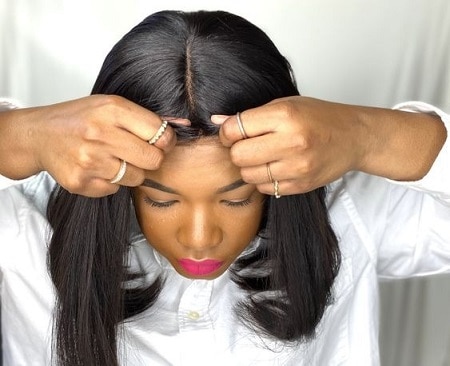
Image source: Pinterest
Quick Answer: How to Put on a Wig
To put on a wig: braid your natural hair flat or tuck it under a wig cap, align the wig's front edge with your natural hairline, then secure it with adjustable straps, combs, or glue (for lace front wigs) and style as desired. Glueless wigs skip the adhesive entirely—just position, strap in, and go.
Glueless vs. Lace Front Wig: Which Should You Choose?
| Feature | Glueless Wig | Lace Front Wig |
| Adhesive | None—adjustable straps, combs, and clips | Wig glue or tape |
| Install Time | 2–5 minutes | 15–30 minutes |
| Hold | Great for daily wear | Strongest hold, ideal for long days |
| Best For | Beginners and sensitive scalps | Natural melt hairlines and longer wear |
Part 1: How to Put on a Glueless Wig in 4 Steps
Glueless wigs are a great option for anyone who wants to skip the hassle of adhesives entirely. UNice carries a wide selection—including put-on-and-go wigs, v-part wigs, and u-part wigs—so you can pick one that fits your routine. Here's how to put on a glueless wig in four steps.
What you'll need:
- Your glueless wig
- A breathable wig cap (optional, depending on your prep)
- A wide-tooth comb
- A handheld mirror
Step 1: Prep Your Natural Hair (or Wig Cap) First
Braid your natural hair tightly against your scalp, or slide on a breathable wig cap. This step isn't optional—it's the secret to a smooth, lump-free base. If any hair pokes out, the wig may look uneven, so double-check with a mirror.
Step 2: Position the Wig on Your Head
Hold the wig's front edges and lower it onto your head like a headband, matching its hairline with your own. It may feel loose or awkward at first. Don't worry—adjustments come next.
Step 3: Secure It With Straps, Combs, or Clips
Most glueless wigs have adjustable straps inside. Tighten them gently until the fit feels snug but not tight—dermatologists warn that constant pulling from overly tight styles can contribute to hair loss (see the AAD's guidance on traction alopecia), so never overtighten. If your wig has combs or clips sewn into the cap, press them into your braids or wig cap.
Step 4: Style It Like Your Own Hair
Part the hair slightly off-center for a natural look, fluff the roots with your fingers for volume, or use a low-heat iron if the fibers allow. A little messiness hides any “too perfect” wig vibes.
Want the Easy Route? Shop Our Best-Selling Glueless Wigs
Part 2: How to Put on a Lace Front Wig in 8 Steps
New to lace front wigs? Follow these steps, and you'll get a secure, natural-looking install without the stress.
Step 1: Gather Your Wig Tools
Scrambling for supplies mid-install is no fun. Prep everything first:
- Lace front wig
- Nude wig cap (matches most skin tones)
- Small sharp scissors
- Wig glue or tape (glue holds longer)
- Foundation or concealer + a makeup sponge
- Hair clips + a wide-tooth comb
Optional: edge control gel for baby hairs.
Step 2: Prep Your Hair Under a Wig Cap
This step is key. Wash your hair with a clarifying shampoo to remove any oils so the adhesive bonds securely, then braid it into cornrows or slick it flat with mousse for a smooth base. Finally, tuck every strand neatly under a wig cap.
Step 3: Trim and Customize the Lace
Here's where I almost panicked my first time. Put the wig on your head—no glue yet—and line up the hairline where you want it. Then gently trim the excess lace with scissors, leaving about ¼ inch; you'll press it into the glue in Step 5. For a realistic finish, pluck a few hairs near the front—subtle but game-changing.
Step 4: Apply Wig Glue (Less Is More)
Apply a thin layer of glue along your hairline and wait 1–2 minutes until it turns tacky. Work in sections instead of doing your whole head at once for better control.
Step 5: Place the Wig on Your Head
Take a deep breath. Starting at the front, press the lace into the glue, matching your natural hairline, then smooth it down gently with a comb, working from the center outward so no air bubbles form.
Pro tip: the #1 beginner mistake here is pressing the lace down before the glue is tacky—see Common Mistakes below.
Step 6: Secure the Sides and Back
Secure the sides and back with wig clips or pins, and adjust the inner straps until they feel snug but not tight. If you're very active, add a small dab of glue along the edges.
Step 7: Blend the Lace With Makeup
If the lace still looks obvious, dab foundation or concealer over it with a sponge and blend along the hairline. Now it reads as your scalp.
Step 8: Style Your Lace Front Wig
Comb the wig, mist it with a light-hold hairspray, or use gel to lay down baby hairs. It's your look—natural, bold, or anything in between.
Ready to Skip the Glue? Meet Glueless Lace Wigs
Common Mistakes When Putting on a Wig
- Skipping the prep. Bumps and stray hairs show straight through the lace. Always braid flat or wear a wig cap.
- Trimming too much lace at once. Cut in small sections and leave that ¼ inch buffer—once it's gone, you can't glue it back.
- Pressing lace into wet glue. Patience pays: wait until the glue turns tacky (1–2 minutes) before pressing.
- Overtightening the straps. Snug, not suffocating. Constant tension is bad for your hairline.
- Making it look “too perfect.” An off-center part and fluffed roots read far more natural than a bone-straight install.
Final Check Before You Head Out
- Hairline aligned with your natural hairline
- Straps snug; combs and clips pressed in place
- Lace blended—no visible edge or shine
- Part looks natural from every angle (check a handheld mirror)
FAQs about How to Put on a Wig
Do I Need to Use Glue to Wear a Lace Front Wig?
No—glue gives the strongest hold, but tape works too. If you'd rather skip adhesives altogether, a glueless wig with adjustable straps and built-in combs is a great alternative. And when the day is done, here's how to safely take off your wig.
What Type of Wig Cap Should I Use under My Wig?
A nude-colored wig cap is the safest pick—it blends with most skin tones and creates a smooth, lump-free base. Just make sure every strand of your natural hair is tucked in neatly before putting it on.
How Do I Apply Wig Glue Correctly?
Apply a thin layer along your hairline, wait 1–2 minutes until it turns tacky, then press the lace down. Working in sections gives you better control.
Can Beginners Wear Lace Front Wigs?
Yes. Break it into steps—prep your hair, trim the lace, apply glue in sections, and blend with concealer—and it's completely manageable. A little practice is all it takes.
How Can I Style My Glueless Wig to Look More Natural?
Part the hair slightly off-center, fluff the roots with your fingers, or use a low-heat iron if the fibers allow—and explore more ways to make your glueless wig look more natural.
Final Thoughts: Your First Wig, Done Right
Your first wig won't be perfect, and that's fine. Mine sat crooked for a week; my tenth takes under five minutes. Start with a glueless wig if you want the gentlest learning curve, then move on to lace front for melt-and-slay looks. Once your wig is on, keep it looking its best with our guide on how to wash a human hair wig, and explore our complete wig care routine for every step of your wig journey.